The Reeve's Tale Magazine guide to FOXLEY WOOD
|
|
||||||||
|
|
||||||||
|
|
||||||||
|
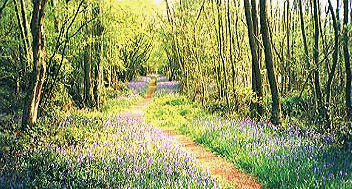
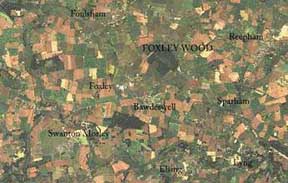
The Doomesday Book noted that it was a large enough area for 300 swine. That is said to be a way of measuring it. It is quite possible it was a hunting ground of kings. In the 20th century the demand for traditional coppiced wood and bark declined and the area became neglected. In the 1960's the Forestry Commission took over and replaced large areas with conifers for pit props and the paper industry. The continuous shade provided by the commercially grown conifers inhibited the wealth of ground flora and fauna that existed there - much of it quite rare. Then the Forestry Commission let the shooting rights and a diligent gamekeeper kept the public out - sometimes at gunpoint! Happily the Norfolk Naturalists Trust was able to purchase the wood in 1988 and not only opened this delightful area to the public but have done great work in felling the conifers and returning the vast majority of the forest to its original state, re-establishing coppicing management. The wood was cut over the centuries to provide a continuous, renewable source of rods, poles, brushwood and timber. In 1784 there is an entry in the accounts of the Evans-Loombe estates: "Received of Thomas Bacon on 29th December for barke out of Foxley Park £4-10s". This is the practise of cutting trees
close to the ground in order to encourage new shoots which spring up around
the stumps and are harvested. The coppice in Foxley is mainly hazel and ash
with some field maple, sallow and small-leave lime. In the past it has been
used for fuel, wattle fences, thatching and laths for building. Nowadays
twelve foot lenghts are bundled together as faggots and used to create river
and sea defences. One of the major features of Foxley Wood
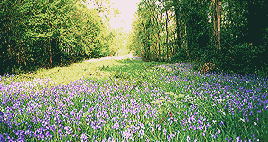
is the series of wide tracks, known as rides, that criss-cross the Wood.
These were developed to allow easy removal of timber but now support a
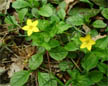
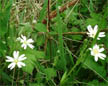
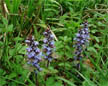
tremendous variety of flowers including various St John's wort, orchids,
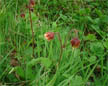
stitchworts and bugle. Some of the rides are dominated by drooping
orange-pink flowers of water avens. |
||||||||
|
||||||||
|
And what of the birdlife
and animals? Well as you can imagine there is a wealth of this too.
Sparrowhawks and tawny owls breed in good numbers and all three species of
woodpecker are present. Young coppice supports garden warbler, black cap and
whitethroat. Good numbers of bank vole and wood mouse keep the resident
weasels, stoats and foxes well supplied. Roe, red and muntjac deer visit the
wood. Evidence of wild boar has been found and at least one eye-witness
report of a sighting in the vicinity. Foxley Wood is a great treasure house
of nature and we are very lucky to have it on our doorstep - accessible for
us to enjoy. It is open from 10am - 5pm every day except Thursdays. No charge
is made. SORRY NO DOGS. |
||||||||
|
|
||||||||
|
Much of the above is taken from the leaflet Foxley Wood published by The Norfolk Wildlife Trust, Telephone 01603 625540 Fax 01603 598300 Email
admin@norfolkwildlifetrust.org.uk All photographs taken in Foxley Wood by Robin Taylor.
|